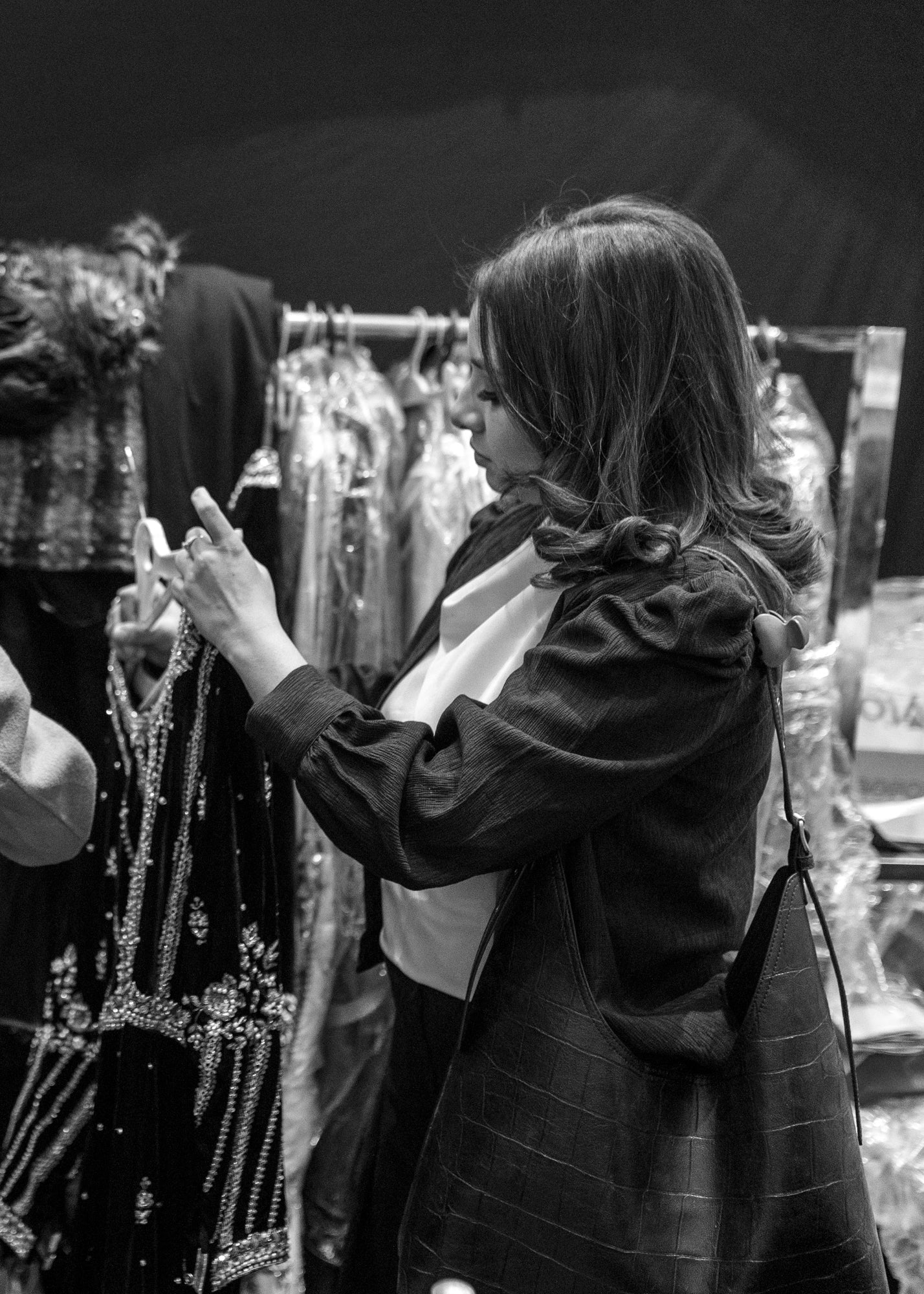
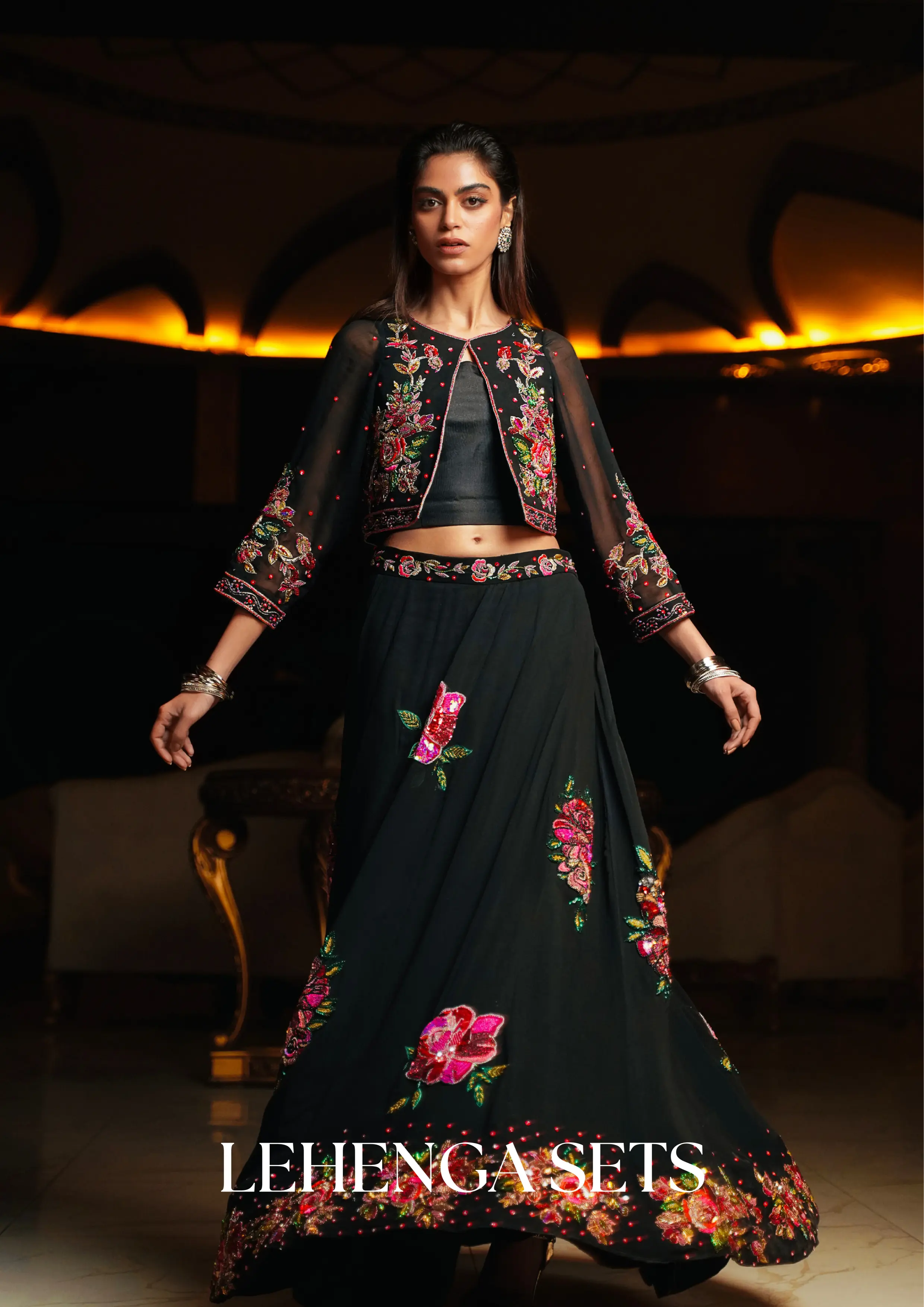
A finished bridal dress looks effortless on the big day — six months of work disappearing into a single entrance. What most brides never see is the journey: the sketches, the fabric debates, the artisans bent over frames placing metallic thread one stitch at a time.
This is that journey, from the inside. Our studio was founded in Islamabad in 2020 by creative director Haya Khan — a PIFD (Pakistan Institute of Fashion and Design) graduate who spent eight years designing for international clients — together with her partner Suleman. The brand's signature is Indo-Western fusion: cultural heritage embroidery carried on modern, modest silhouettes. Here is how a piece actually comes to life.
Step 1: The Concept — Where Heritage Meets the Bride
Every outfit starts as a conversation, not a sketch. Which event? Which silhouette suits the bride's height and frame? How traditional, how modern? From there the design team draws the piece — motif placement, embroidery density, dupatta story — and locks colours against real fabric swatches, never screen approximations.
Pieces in our Bridal collection each begin exactly this way — named designs like Noor-e-Ishq (pastel threadwork under crystals and pearls) or Mehr-e-Naz started as a concept board long before a needle moved.
Step 2: Fabric — The Foundation Everything Sits On
Fabric choice decides what the embroidery can do:
-
Raw silk — structured, holds heavy kaam; the barat workhorse
-
Jamawar — pattern woven into the base itself; heritage depth
-
Organza — crisp and light-catching; nikkahs and walimas
-
Velvet — winter's fabric; rich ground for gold work (see Velvet Soiree)
-
Chiffon & silk blends — movement for drapes, sarees and modern gowns
Step 3: The Kaam — Types of Pakistani Bridal Embroidery
"Kaam" (the work) is what separates couture from clothing. These are the main types you'll find across Pakistani bridal wear, and on our pieces:
A single bridal piece usually layers three or four of these. The pastel threadwork under crystals and pearls on Noor-e-Ishq, for instance, is resham ground with hand-set stonework above it.
Step 4: The Frame — Months of Hand Embroidery
The cut fabric panels are stretched over a wooden frame (adda), and the artisans begin. This is the longest chapter of the journey: a heavily worked barat outfit carries hundreds of hours of handwork across 3–5 months. There are no shortcuts that preserve the result — machine embroidery can echo the patterns, but it cannot replicate the depth, the slight human variation, or the way hand-set work catches light.
This is also why we tell every bride: if a quote or timeline seems impossibly good for "handwork," it isn't handwork.
Step 5: Construction and Fittings
Only after embroidery do the panels become a garment. The pieces are joined, lined, structured — can-can for volume, boning where silhouettes need it — and finished. Then come fittings: at minimum one mid-production and one final, where blouse, waist and fall are adjusted to the bride's body. Good ateliers cut with adjustment margins, because bodies change between booking and barat.
Step 6: Finishing and the Handover
The last days belong to detail: dupatta edging, final press and steam, hanging loops, and a careful inspection of every motif. Then the piece meets its bride — the moment the whole journey was for.
From Everyday Chic to Bridal: One Philosophy
The same process scales across our collections — lighter kaam and faster timelines for Luxury Pret and Festive wear, full ceremony for bridal. The design philosophy stays constant: lightweight luxury fabrics, heritage embroidery, Indo-Western tailoring with modesty built in.
Frequently Asked Questions
How long does it take to make a Pakistani bridal dress? A hand-embroidered bridal outfit takes 3–5 months — the embroidery frame stage alone accounts for hundreds of artisan hours.
What are the main types of embroidery (kaam) on Pakistani bridal dresses? Zardozi, kamdani/mukaish, resham, dabka, naqshi, crystal and pearl work, sequins and gota — most bridal pieces layer several.
What's the difference between hand and machine embroidery? Hand kaam has depth, dimension and subtle variation machine work can't replicate — it's also what drives couture timelines and pricing.
Can I watch my outfit being made? We share progress photos and videos during production, and brides visiting Islamabad can see their piece on the frame at our F-7 studio.
Curious what this journey would create for you? Explore the Bridal collection or book a consultation at our studio — F-7 Markaz, Union Gold Mall, 1st Floor, Islamabad. Virtual consultations available worldwide.